-
Baking Soda and Sodium Chloride - Chemistry, Class 11, s-Block Elements
Sodium chloride(NaCl) The most abundant source of sodium chloride is sea water which contains 2.7-2.9% by mass. Common salt is generally obtained by evaporation of sea water.
2026-07-17 -
Common Salt - Acid Bases and Salts, Class 10
Question 1 What is a salt? Give example? Question 2 Give the name and formula of any two salts. Also name the acids from which they are formed? Question 3 What is meant by family of salts? Question 4 Write the chemical name and formula of common salt? Question 5 How is common salt obtained […]
2026-07-10 -
Balancing Of A Chemical Equation - Chemistry, Class 11, Some Basic Concepts of Chemistry
Balancing of a chemical equation means making the number of atoms of each element equal on both sides of the equation. The methods of balancing equation are: 1) Hit and Trial Method: The simplest method to balance a chemical equation is by hit and trial method. Step 1 : Write down the correct formula of the […]
2026-07-17
-
Common Salt - Acid Bases and Salts, Class 10
Question 1 What is a salt? Give example? Question 2 Give the name and formula of any two salts. Also name the acids from which they are formed? Question 3 What is meant by family of salts? Question 4 Write the chemical name and formula of common salt? Question 5 How is common salt obtained […]
2026-07-17 -
Equilibria in Chemical processes - Chemistry, Class 11, Equilibrium
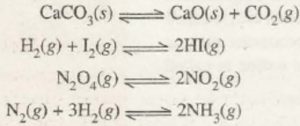
A reaction in which not only the reactants react to form the products under certain conditions but also the products react to form reactants under the same conditions is called a reversible reaction. A reaction which takes place not only in forward direction but also in the backward direction under the same conditions is called […]
2026-07-17 -
Hard and Soft water - Chemistry, Class 11, Hydrogen
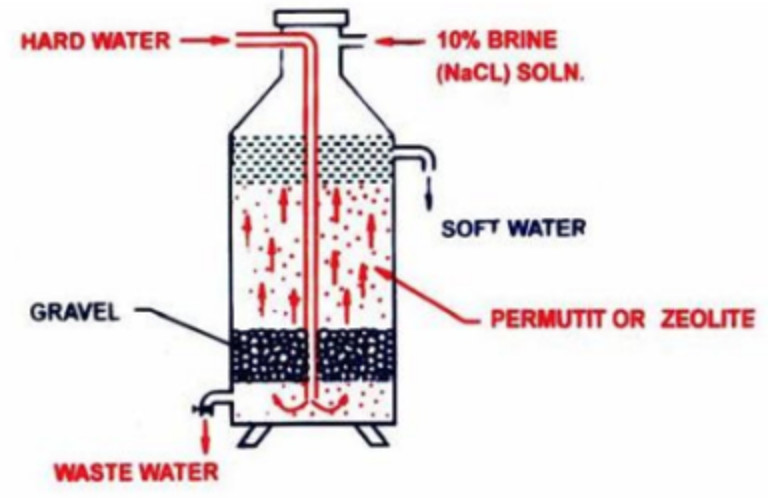
Depending upon its behaviour towards soap solution w.r.t. lather formation, water may be classified as : soft water and hard water. Soft water: Water that produces lather with soap readily is called soft water. For ex: Rain water, distilled water, demineralised water. Hard water: Water which does not produce lather with soap readily is called hard […]
2026-07-17 -
Chlorine - Chemistry, Class 12, The p-Block Elements
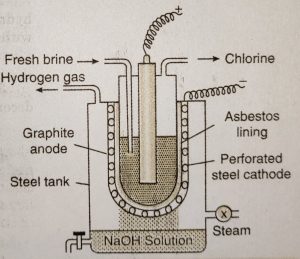
Contents1 Chlorine2 Laboratory Preparation of Chlorine3 Manufacture of Chlorine4 Properties of Chlorine4.1 Physical properties of Chlorine4.2 Chemical properties of chlorine5 Uses of Chlorine Chlorine Occurrence Chlorine is very reactive and does not occur in nature in free state. It occurs mostly as chlorides of sodium and other alkali and alkaline earth metals. The most abundant […]
2026-07-17 -
Ionic Equilibrium - Chemistry, Class 11, Ionic Equilibrium
An electrolyte is defined as a compound whose aqueous solution or melt conduct electricity. A compound whose aqueous solution or melt does not conduct electricity is called a non-electrolyte. Aqueous solution of inorganic acids, bases and salts conduct electricity and hence they are electrolytes. Aqueous solution of sugar, urea do not conduct electricity and hence […]
2026-07-17 -
Characteristics Of Compounds Of Alkaline Earth Metals - Chemistry, Class 11, s-Block Elements
Due to higher enthalpy of formation in the solid state and due to higher hydration enthalpy in the aqueous solution, alkaline earth metals uniformally form bipositive ions. Due to increased nuclear charge and smaller size, alkaline earth metals form compounds which are less ionic than the corresponding compounds of the alkali metals. Oxides and Hydroxides […]
2026-07-17 -
Physical properties of s-block elements - Chemistry, Class 11, s-Block Elements
The group 1 of the periodic table contains 6 elements namely Lithium ,Sodium ,Potassium, rubidium, caesium and francium. They are usually referred to as alkali metals since their oxides and hydroxides are soluble in water and form strong bases or alkalies. Alkali metals are highly reactive and hence do not occur in the free state […]
2026-07-17